Locations:





Cleveland Clinic News Service | 216.444.0141
We’re available to shoot custom interviews & b-roll for media outlets upon request.
CCNS health and medical content is consumer-friendly, professional broadcast quality (available in HD), and available to media outlets each day.
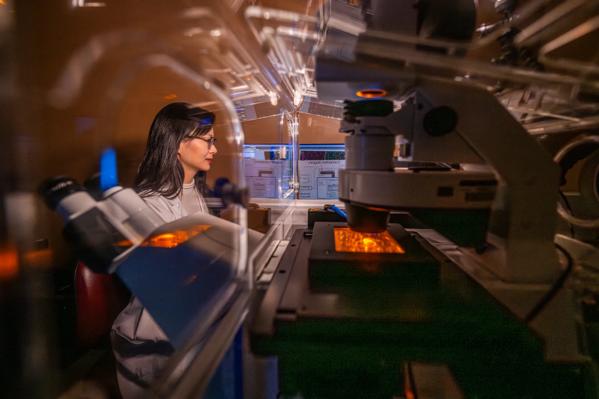
At Cleveland Clinic, we're witnessing a remarkable transformation in healthcare delivery through the convergence of artificial intelligence (AI) algorithms and augmented reality (AR) applications. These technologies aren't just enhancing patient care – they're fundamentally reshaping how and where healthcare is delivered, particularly as we emerge from a period that has highlighted the critical need for innovative care delivery solutions.
One breakthrough development involves AR technology that's revolutionizing rehabilitation therapy. Through Cleveland Clinic’s partnership with Strolll, a UK-based company specializing in Parkinson's treatment solutions, we've licensed Cleveland Clinic’s Dual-task Augmented Reality Treatment (DART) technology that uses an AR headset to project digital objects onto the real world. This system enables us to provide "dual-task training (DTT)" for patients with Parkinson's disease and other neuromuscular diseases.
The technology creates sophisticated challenges – such as spelling words backward while navigating obstacles – that might seem simple but are carefully designed to improve both cognitive and physical capabilities simultaneously. Our systems automatically capture and analyze gait, balance, and motion data, providing therapists with unprecedented insight into patient progress.
What makes this particularly transformative is that in the future patients will be able to continue their therapy at home. As Strolll further expands its reach to major healthcare systems, we're seeing how this technology can scale to benefit more patients while maintaining the quality of care they would receive in a clinical setting.
While AR is transforming therapy delivery, our AI algorithms are revolutionizing diagnosis. We've developed automated algorithms that can identify critical conditions like aortic dissections in chest scans – a condition that, while rare, can be fatal if missed. This technology ensures that even hospitals without specialized expertise can provide high-level diagnostic capabilities, effectively democratizing medical expertise.
Our recent work with Tempus, a leader in AI and precision medicine that recently went public, demonstrates the power of AI in personalized medicine. Tempus has licensed a machine-learning-based algorithmic test developed by Timothy A. Chan, MD, PhD, Cleveland Clinic, and published in Nature Biotechnology, that demonstrates an ability to predict the efficacy of immune checkpoint blockade based on patient-specific biological, laboratory, genomic, and clinical factors, and adds to their expanding immunotherapy specific biomarker portfolio.
The healthcare technology landscape is evolving rapidly, particularly in these key areas:
However, this transformation comes with its own set of challenges. Healthcare organizations are working to determine the best ways to validate algorithms across diverse datasets, navigate regulatory requirements, and integrate these tools effectively into clinical workflows. There's also the ongoing question of how to package and monetize these digital assets in a way that makes them sustainable while ensuring broad access to care.
As we move forward, we're seeing increased focus on several key areas:
Our goal isn't to replace human caregivers but to augment their capabilities and extend their reach. Cleveland Clinic's partnerships with innovative companies and our internal development efforts are focused on making healthcare more accessible, precise, and personalized than ever before. As we continue to advance these technologies, we're not just improving individual tools and treatments – we're fundamentally reimagining how healthcare can be delivered in the 21st century.
Cleveland Clinic is a nonprofit multispecialty academic medical center that integrates clinical and hospital care with research and education. Located in Cleveland, Ohio, it was founded in 1921 by four renowned physicians with a vision of providing outstanding patient care based upon the principles of cooperation, compassion and innovation. Cleveland Clinic has pioneered many medical breakthroughs, including coronary artery bypass surgery and the first face transplant in the United States. Cleveland Clinic is consistently recognized in the U.S. and throughout the world for its expertise and care. Among Cleveland Clinic’s 81,000 employees worldwide are more than 5,743 salaried physicians and researchers, and 20,160 registered nurses and advanced practice providers, representing 140 medical specialties and subspecialties. Cleveland Clinic is a 6,690-bed health system that includes a 173-acre main campus near downtown Cleveland, 23 hospitals, 276 outpatient facilities, including locations in northeast Ohio; Florida; Las Vegas, Nevada; Toronto, Canada; Abu Dhabi, UAE; and London, England. In 2023, there were 13.7 million outpatient encounters, 323,000 hospital admissions and observations, and 301,000 surgeries and procedures throughout Cleveland Clinic’s health system. Patients came for treatment from every state and 132 countries. Visit us at clevelandclinic.org. Follow us at twitter.com/CleClinicNews. News and resources available at newsroom.clevelandclinic.org.
Editor’s Note: Cleveland Clinic News Service is available to provide broadcast-quality interviews and B-roll upon request.




 Search